
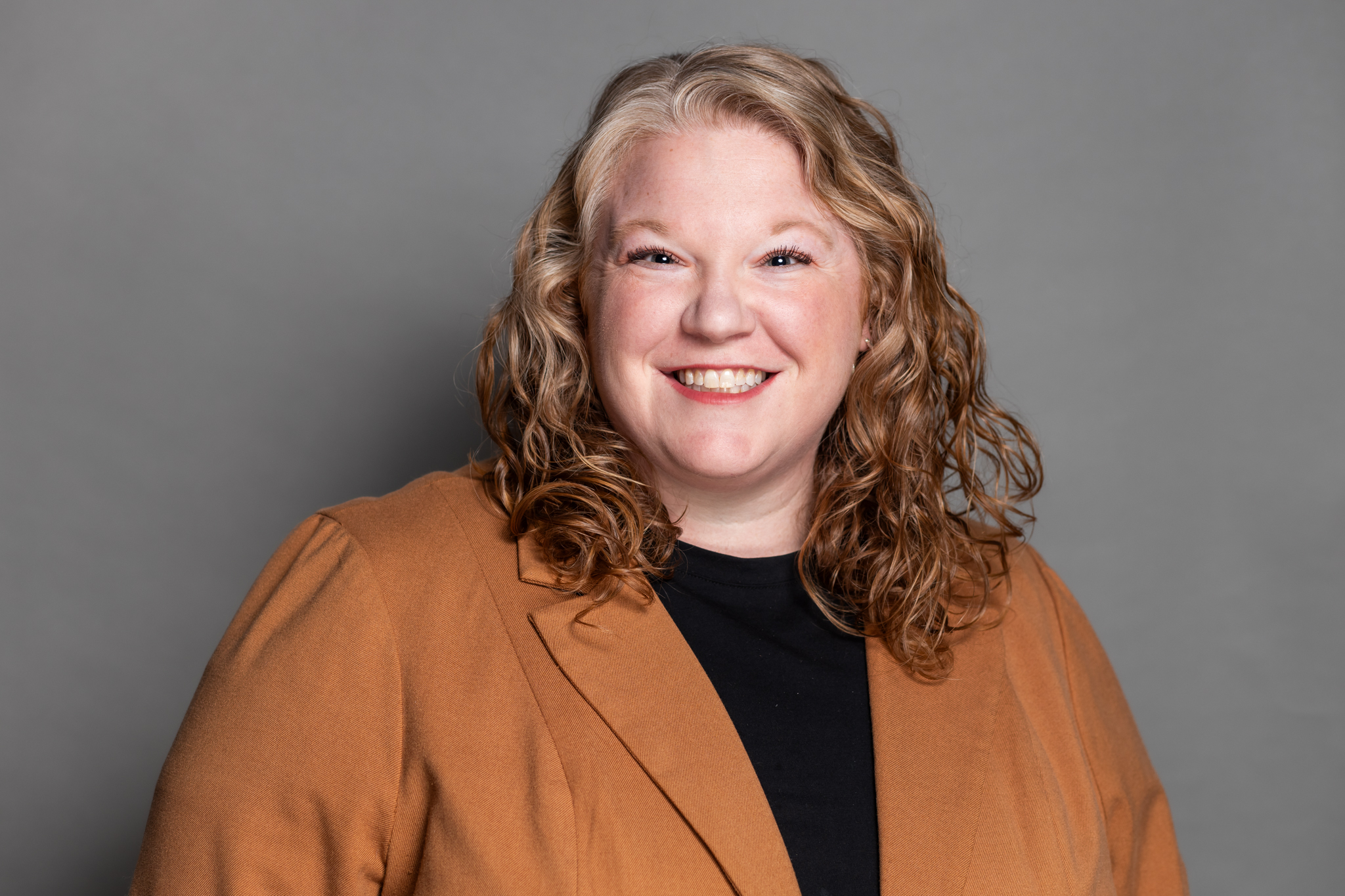
How the Planning Department Turns School Needs Into Buildings, with Kayla Anthony
By Sanai Jackson - Published March 5, 2026
Behind every successful build in PGCPS is a team that carefully plans the scope of each project. The Planning team develops proposals for education facilities and works closely with project teams to assess funding, location, and functionality. We met with Planning Supervisor Kayla Anthony to better understand how the team is strengthening the facilities construction process with a community-first approach.
Why was working on schools in Prince George’s County important to you?
I live in Prince George’s County, and I’ve always enjoyed the opportunity to work on projects that impact the community I’m a part of. I have a passion for schools and K–12 planning, and those interests led me to Prince George’s County Public Schools. Before PGCPS, I spent about a decade in consulting and wanted to understand what it was like to work on the owner side in the public sector. This role felt like the right opportunity to expand my skill set while increasing my impact on the county.
What does the future of planning look like for PGCPS?
We’re continuing to build our team and capabilities to better support the Department of Capital Programs, along with our Design and Implementation teams. It’s an exciting time, and we have the opportunity to determine what works best for our division, schools, and constituents.
Two major initiatives underway over the next year, to year and a half, include updates to our educational specifications, which guide every project and set standards for facilities, and a comprehensive update to our facilities master plan. The previous master plan guided more than $2 billion in investment across the county, and this update will shape development for the next decade or more.
Could you tell me about your team’s involvement in the development of the Education Facilities Master Plan?
The Education Facilities Master Plan, or EFMP, is required by the state and updated annually. The planning team oversees its development, ensures accurate inputs, and supports submission and approval. The EFMP guides the capital budget released the following fall and outlines priorities for how we invest our resources.
I see the planning team as the glue that brings together perspectives across PGCPS. It takes more than one person to determine where and how facilities are built. Our role is to provide strategic vision and involve the right stakeholders to understand the portfolio in a nuanced way. Periodically, we conduct major overhauls of the EFMP to assess enrollment trends, county development, investment impacts, and facility conditions. We’re currently undertaking that process for the 2028 EFMP, which will be finalized in 2027.
What is your role in the development of the District Capital Improvement Program?
Our role mirrors the EFMP in many ways. We coordinate with fiscal teams for budget data, maintenance teams for building condition insights, and project managers who navigate unforeseen challenges during implementation. When different aspects of the budget come together, we act as the glue, or even the conductor, ensuring alignment before proposals go to the Board of Education, County Council, and the state.
How do you prioritize the need for modernizations or new construction?
The EFMP establishes criteria that are applied across the entire portfolio to determine project type and timing. Some schools can meet educational requirements through renovations, while others may require replacement or new construction. Executive leadership helps develop the vision and criteria, which often include physical building condition, capacity, current enrollment, and enrollment projections.
What’s the biggest challenge PGCPS faces regarding facilities needs?
The biggest challenge is funding. While we have strong partnerships with the county and the state, limited capital funding means we’re often extending the life of buildings longer than intended. This stretches both capital and operating resources and makes it harder to deliver modern education in facilities designed decades ago. This is not unique to PGCPS, it’s a nationwide challenge.
How does PGCPS involve the community in the planning process?
Community engagement happens in multiple ways. My philosophy is to meet people where they are and be transparent about how decisions are made. Planning can feel complicated, but the concepts don’t have to be.
Some community members simply want access to information, which we provide through our website and newsletters. Others want broader involvement in understanding how schools are prioritized and funded. At the project level, our Project Planning Committees engage communities directly to discuss improvements, timelines, and design and construction phases. Our goal is to be thoughtful about engagement while ensuring opportunities exist at different levels.
How does the planning team collaborate with design, construction, and project teams?
Collaboration happens across the entire development continuum. Decisions made during planning need to be clearly communicated as projects move into design and construction. Strong project handoffs and representation from planning, design, and construction at every stage help ensure decisions are made with full context.
Are there any upcoming projects your team is eager to begin planning?
In addition to our ongoing work, the educational specifications update and master plan update are two major initiatives I want to highlight. Both involve stakeholders across the organization and focus on how facilities need to adapt to evolving educational approaches. We’ve kicked off early planning, outlined schedules and community touchpoints, and are gathering feedback from our executive committee.