A Unified Approach to Sustainable Design
By Robert Nelson - Published February 14, 2025
Prince George's County Public Schools (PGCPS) is committed to sustainability across the entire district, ensuring that every new facility reflects the district's environmental goals and priorities. Through the Department of Capital Programs (DCP), PGCPS integrates eco-friendly features across its schools and facilities, reducing each site’s environmental impact, improving energy efficiency, and creating healthier learning environments. These district-wide efforts align with Maryland's Climate Change Action Plan, which aims to cut carbon emissions, lower operational costs, and promote environmental resilience.
All new schools in the district are designed to achieve LEED Silver certification or an equivalent standard by incorporating sustainable construction methods, using fewer resources, generating less waste, and operating more efficiently. LEED certification is a globally recognized rating system that evaluates buildings on sustainability and environmental responsibility, using a point system to award one of its four certifications. The Silver certification indicates that a project has surpassed the basic LEED requirements, achieving over 50% of the available points. This credential exhibits that newly constructed Prince George's County schools comply with high-performance environmental standards, reinforcing the commitment to responsible development.
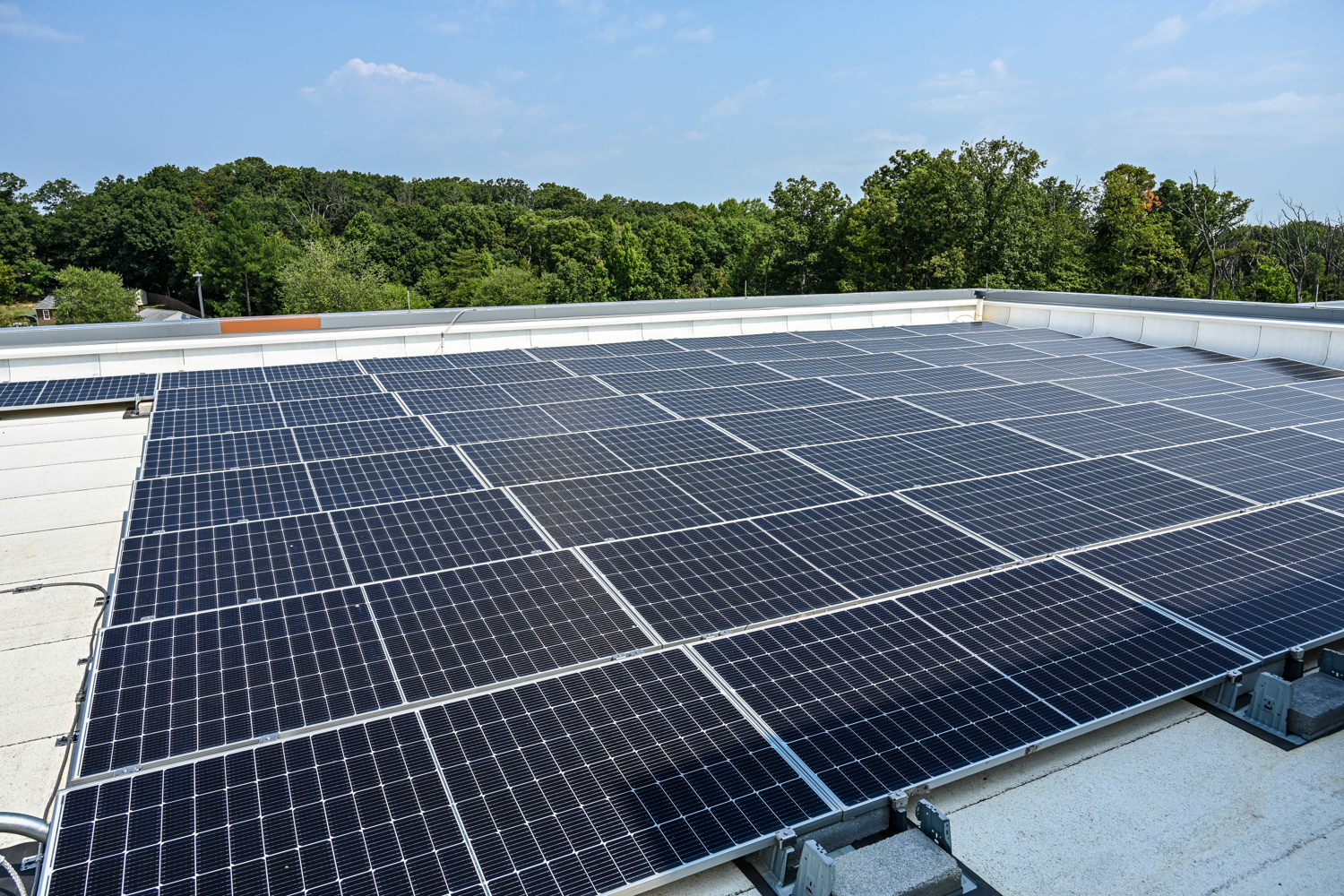
Solar power has become a key component of PGCPS's sustainability initiatives as the district expands its focus on renewable energy. DCP strategically installs photovoltaic solar panels at multiple school sites to reduce greenhouse gas emissions and reliance on fossil fuels. According to the U.S. Environmental Protection Agency, a 100-kilowatt solar system can offset approximately 156 metric tons of CO₂ per year, equivalent to removing about 33 passenger vehicles from the road annually. Large-scale solar installations, such as those at Ellen Ochoa Middle School, which features 65,000 square feet of photovoltaic panels, are estimated to eliminate approximately 1,361 metric tons of CO₂ emissions per year, the equivalent of removing around 296 passenger vehicles from the road annually.
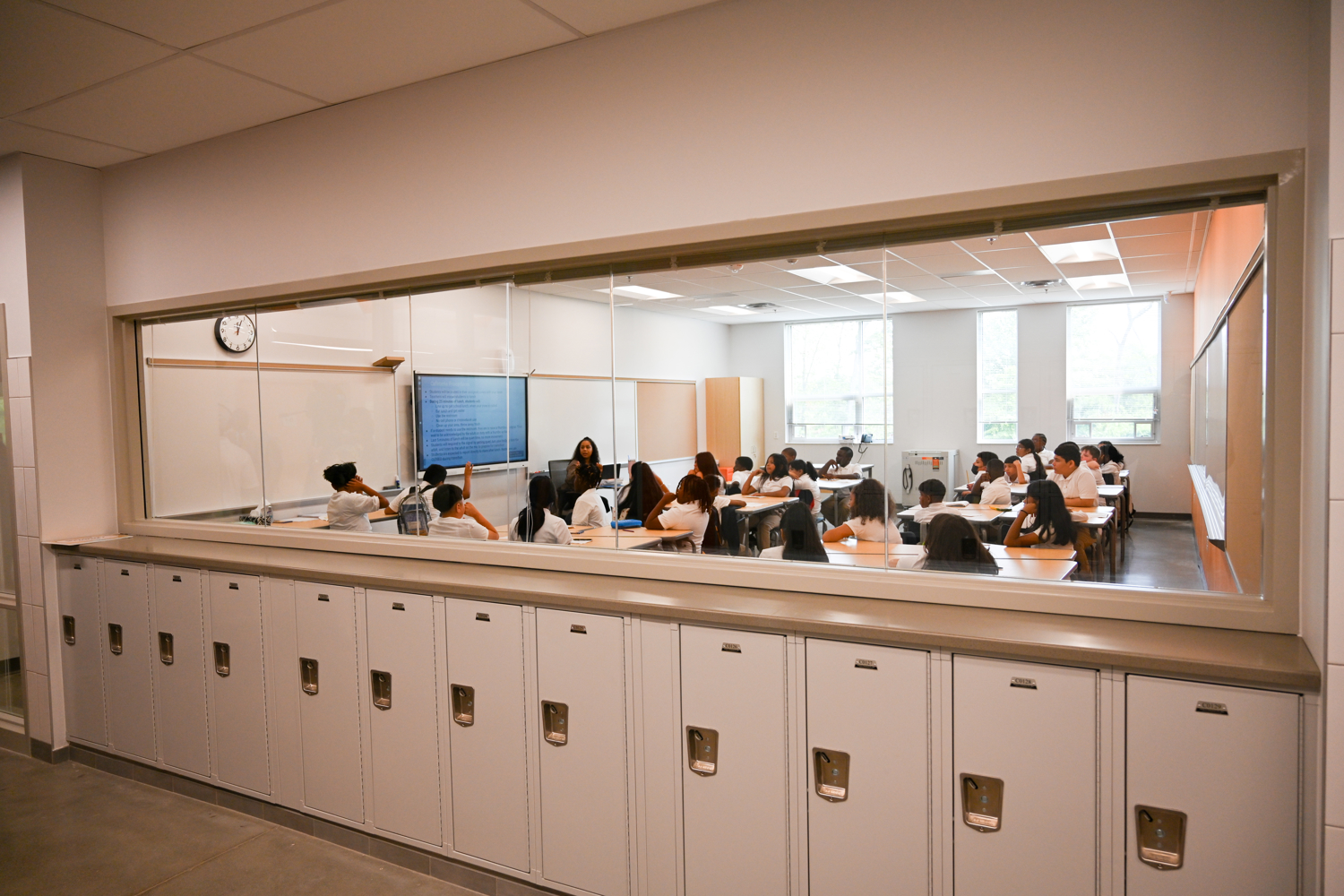
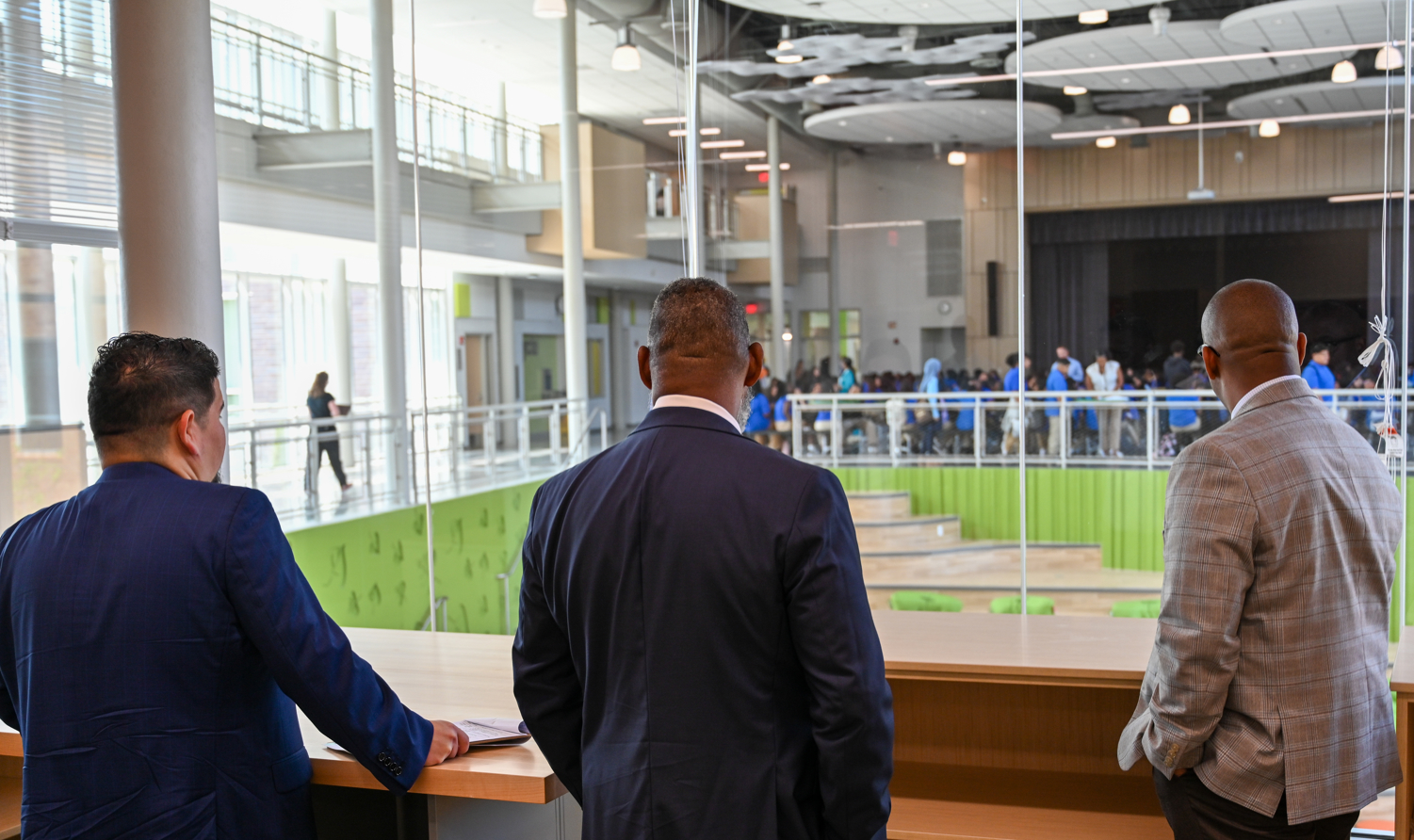
A 2015 study in the United Kingdom, titled "The Impact of Classroom Design on Pupils' Learning," explored how various physical features of classrooms affect student learning and academic progress. The research focused on several parameters, emphasizing three key factors related to eco-friendly designs: the quality and quantity of natural light, thermal comfort in the classroom, and air ventilation and freshness. These three factors are collectively referred to as 'naturalness' factors, which the study found accounted for 50% of the impact on learning. Recognizing the importance of these factors, DCP incorporates ample daylighting through skylights and strategically placed windows in new school designs. These features reduce energy consumption and improve student focus, mood, and academic performance.
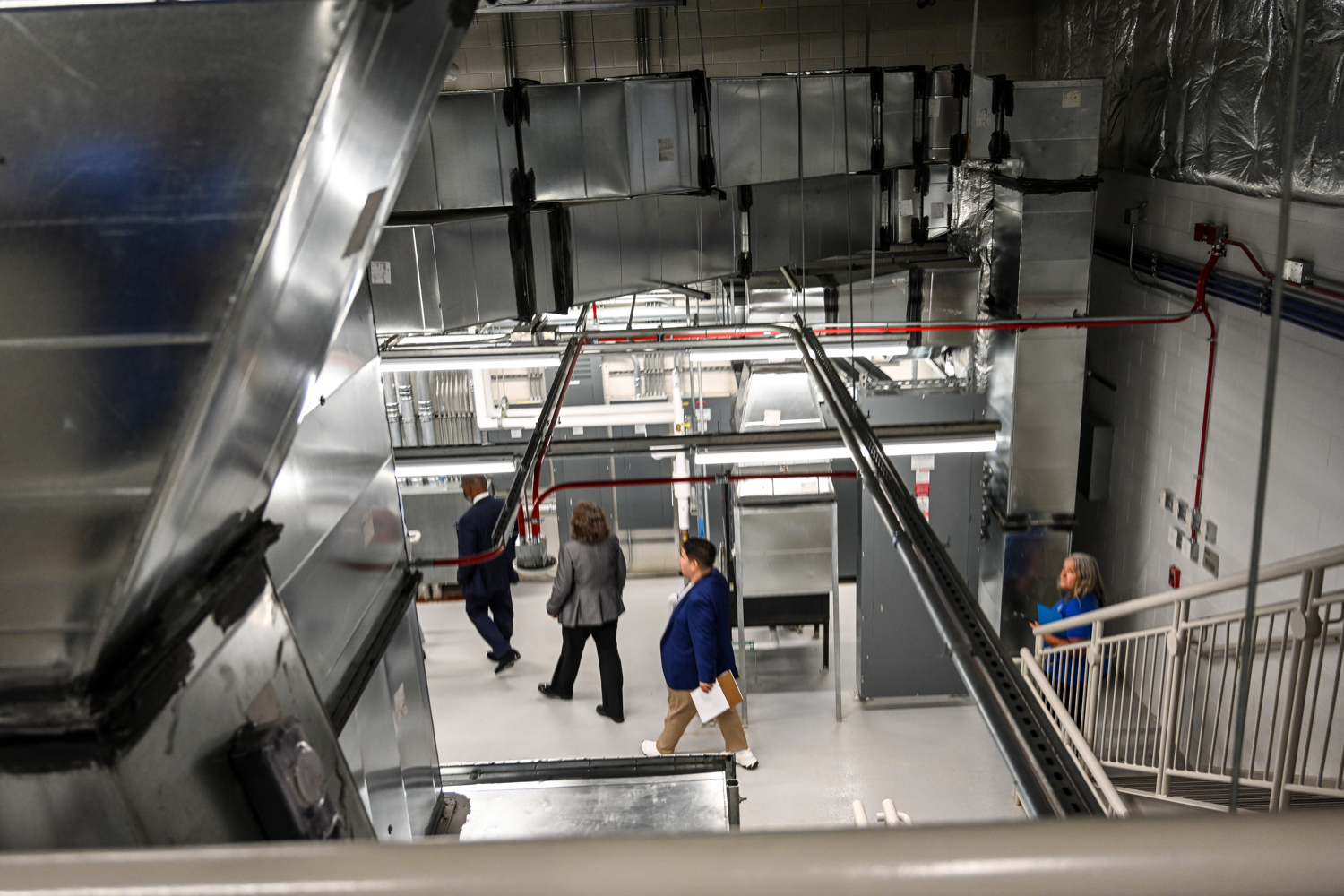
Beyond lighting, advanced HVAC systems are implemented district-wide, featuring UV sterilization and CO₂ monitoring to enhance air quality. These systems ensure fresh, clean air circulation, reduce airborne contaminants, and optimize energy use. PGCPS fosters a healthier, more productive learning environment for students and staff by prioritizing air quality and ventilation in every new facility.
Sustainability efforts also extend to the outdoor spaces surrounding schools. Across the district, campuses feature stormwater management solutions like bioswales and underground retention facilities to prevent flooding and protect local waterways. Shade trees are planted throughout paved areas to reduce heat buildup, and school site layouts are designed for safety and accessibility, with clear sightlines, wide corridors, and well-planned traffic zones for buses and cars.
The Department of Capital Programs adopts a district-wide approach to sustainable design, ensuring that each new school exemplifies environmentally responsible construction. By incorporating energy-efficient design, renewable energy solutions, and health measures focused on students, these initiatives highlight the commitment to minimizing environmental impact throughout Prince George's County.