Strategic Realignment Workgroup: Reimagining Resources to Meet the Moment
Strategic Realignment Workgroup: Reimagining Resources to Meet the Moment

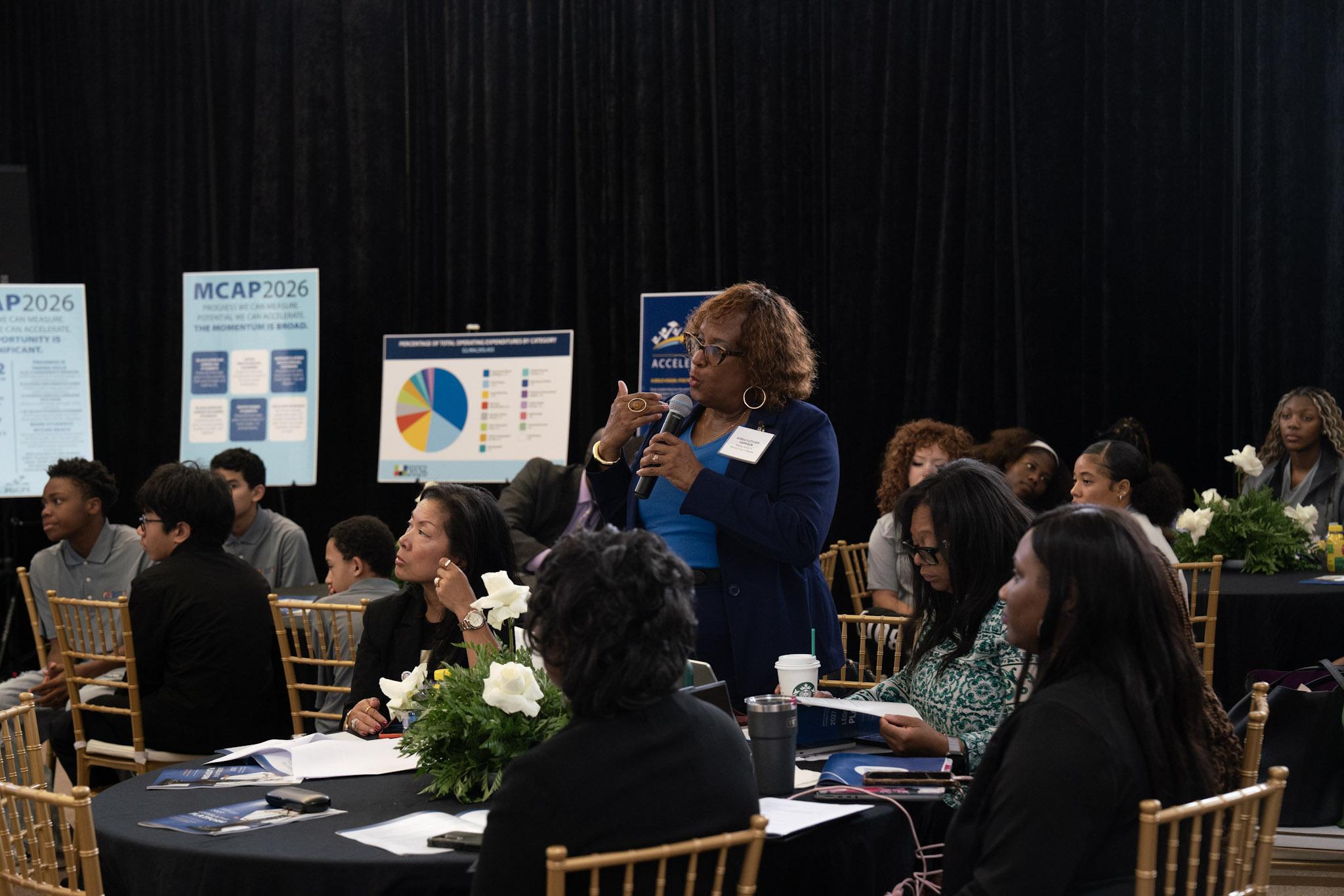
The Strategic Realignment Workgroup reconvened on May 11 to continue to focus on solutions for the district’s long-term financial
stability and operational efficiency.
District leaders and community members considered two possible budget scenarios for FY27:
- If PGCPS receives the full requested $50 million in additional County funding
- If the district receives $20 million in additional County funding and must manage a remaining $30 million budget gap
Subcommittee Brainstorming: Turning Options into Action
Following the opening briefing, members moved into their respective breakout groups to dissect transportation efficiencies, revenue diversification, and community feedback frameworks.
Revenue and Sustainability Committee
This subcommittee hosted a detailed presentation from the PGCPS Grants Team, focusing on systemic competitive grants and funding models aligned with the Blueprint for Maryland’s Future. The group explored how to aggressively pursue outside revenue to protect vital programs. Key discussion points included:
- Strategic Grant Focus: Prioritizing "winnable" competitive grants over $20,000 that directly align with existing district priorities, data, and demonstrated student needs.
- The "Three S's": Emphasizing the core grant management principles of Sustainability, Supplement, and Supplant to ensure external funding properly expands STEM, literacy, arts, and mental health programs without unsustainably replacing core budget items.
- Community & County Partnerships: Investigating deeper collaborations with external entities, including the Prince George’s County Office of Community Impact, to bring critical services directly into schools even when funding sits outside the traditional district budget.
- Systemic Optimization: Addressing committee questions regarding how grant allocations are prioritized, avoiding duplication of services, and expanding grant opportunities for specialty and immersion programs.
Fiscal Review and Resource Alignment Committee
This group focused on logistics, structural adjustments, and cost-efficiencies following a comprehensive Transportation Audit Summary presented by Transportation Director Keba Baldwin. The audit identified six core areas for improvement and twelve specific recommendations, five of which are targeting immediate implementation:
- Route & Operations Optimization: Discussing upcoming efficiencies such as compressing school bell times into three short start windows, consolidating bus stops, and conducting walk zone audits.
- Modernizing Driver Tech: Transitioning to digital tablets for drivers to boost route efficiency, while actively managing driver overtime costs. Workgroup members noted significant progress, with bus driver vacancies dropping below 50.
- Specialty Program Transportation: Debating the fiscal sustainability of providing neighborhood transportation for every specialty program. The committee advocated for re-examining "hub stops" for K-8 specialty programs and exploring the use of smaller, more cost-effective vehicles (like vans) that do not require CDL drivers.
- Administrative Safeguards: Examining the logistical challenges of an "opt-in/opt-out" transportation model and highlighting the critical need for better seat-utilization data via tools like the Chipmunk app.
Stakeholder Engagement and Policy Recommendations Committee
This team mapped out a multi-layered stakeholder engagement plan designed to gather transparent community feedback regarding the FY27 budget options and potential programmatic trade-offs:
- Families: Leveraging high-engagement channels like Telephone Town Halls and In-Person Town Halls to identify parent priorities and gauge what families are willing to sacrifice if cuts become necessary.
- Educators & Staff: Prioritizing direct feedback from coordinators of programs facing potential reductions, utilizing staff town halls, and leveraging principal-led meetings to maintain absolute structural transparency.
- Students: Meeting student stakeholders where they are through targeted focus groups, digital surveys, and direct in-person meetings with affected program participants and the Student Government Association (SGA).
- Community Leaders: Developing consistent advocacy pipelines, including weekly targeted communications to elected officials.
What’s Next
The workgroup will continue refining recommendations and reviewing additional data in the coming weeks. The next meeting is May 26.