Inside PGCPS
Facilities
Geothermal Energy in Schools: Six Reasons Why
Oct 22, 2026
Geothermal Day (October 17) highlights the role of clean geothermal heating, cooling, and power generation in reaching a sustainable energy future. PGCPS has embraced the enormous potential of geothermal energy through its goal toward reducing the use of fossil fuels outlined in our Climate Change Action Plan (CCAP).
“Geothermal heating and cooling systems in our schools are the most energy-efficient and longest-lasting systems available, drastically lowering operating and maintenance costs by 70% while creating a quieter, more comfortable learning environment. PGCPS is proud to invest wisely in geothermal energy for every new school construction – it just makes sense.” – Dorothy Morrison, Director, PGCPS Department of Sustainability and Resilience
When we talk about building a new school, we naturally focus on modern classrooms, playground space, and updated technology for our kids. But one of the most important decisions happens out of sight: how we heat and cool the building.
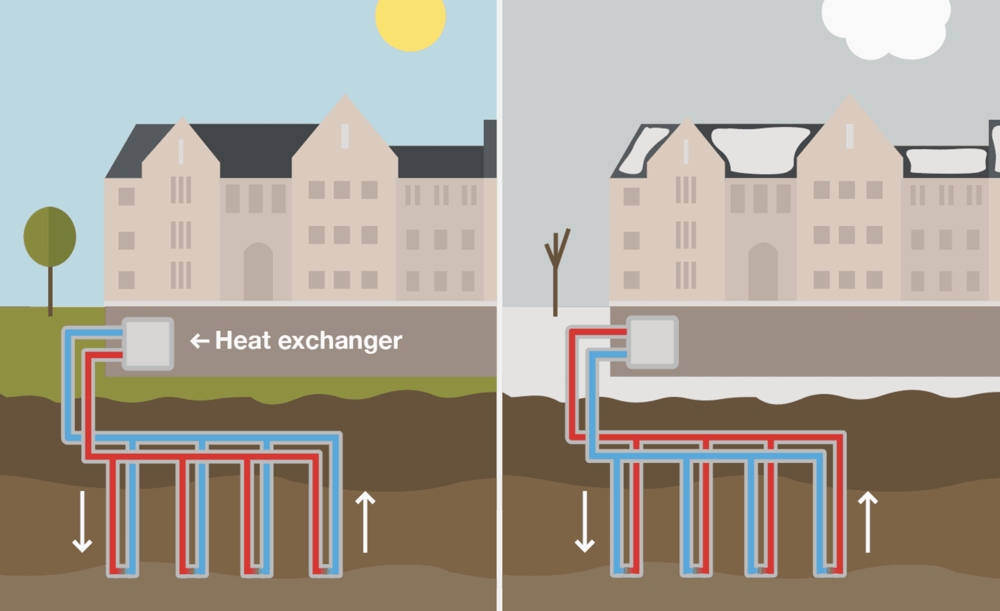 Diagram of how the flow of water in geothermal systems cools and heats a building
By choosing geothermal energy, we aren't just building a physical structure—we are creating a comfortable, healthy, and sustainable space where our kids can thrive for decades to come. Geothermal isn't just a win for the environment—it directly benefits our children, our teachers, and our tax dollars. Here are six reasons why geothermal heat is a fantastic choice for our students:
Geothermal heat pump systems deliver balanced, steady temperatures without the harsh drafts, hot spots, or dry air common with older heating systems. Plus, because geothermal eliminates the need to burn fossil fuels on site, there are no dangerous fumes or emissions—just clean, fresh air inside and outside the classroom.
Traditional air conditioning units are loud, bulky, and distracting when placed near classroom windows or outdoor recreation areas. Geothermal equipment is mostly buried underground or tucked quietly away indoors. That means quieter classrooms where students can hear their teachers and focus on learning.
Because geothermal loops are installed underground, they don't take up valuable surface space. That leaves maximum room on campus for what matters most to our students: larger sports fields, safe playgrounds, outdoor learning spaces, and parent drop-off zones.
Whether it’s an unseasonably hot August afternoon or a freezing January morning, the temperature deep under the ground stays constant year-round. Geothermal systems don't rely on weather conditions, ensuring children stay comfortable in school 100% of the time.
Geothermal systems are incredibly efficient to run. Lower utility bills for the school district mean fewer tax dollars wasted on high energy bills—and more funds directed right back where they belong: hiring great teachers, updating school supplies, and supporting student programs.
Installing geothermal energy turns our new school building into a real-world learning tool. Students can see renewable energy in action every day, inspiring the next generation of scientists, engineers, and environmental leaders right from their own school building.
 |
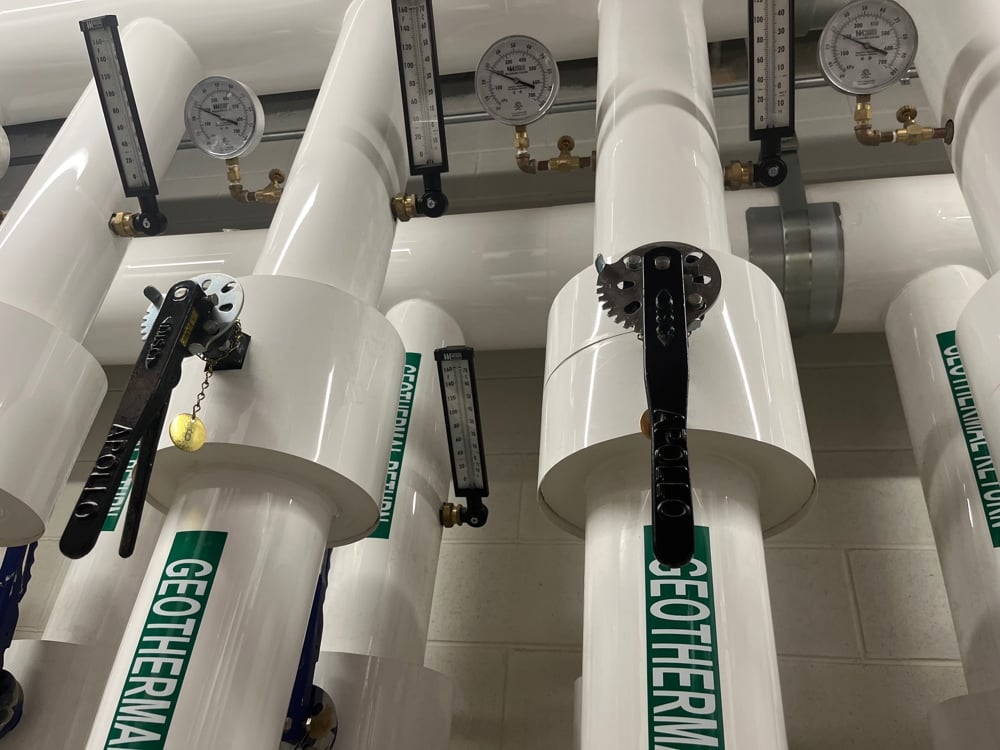 |
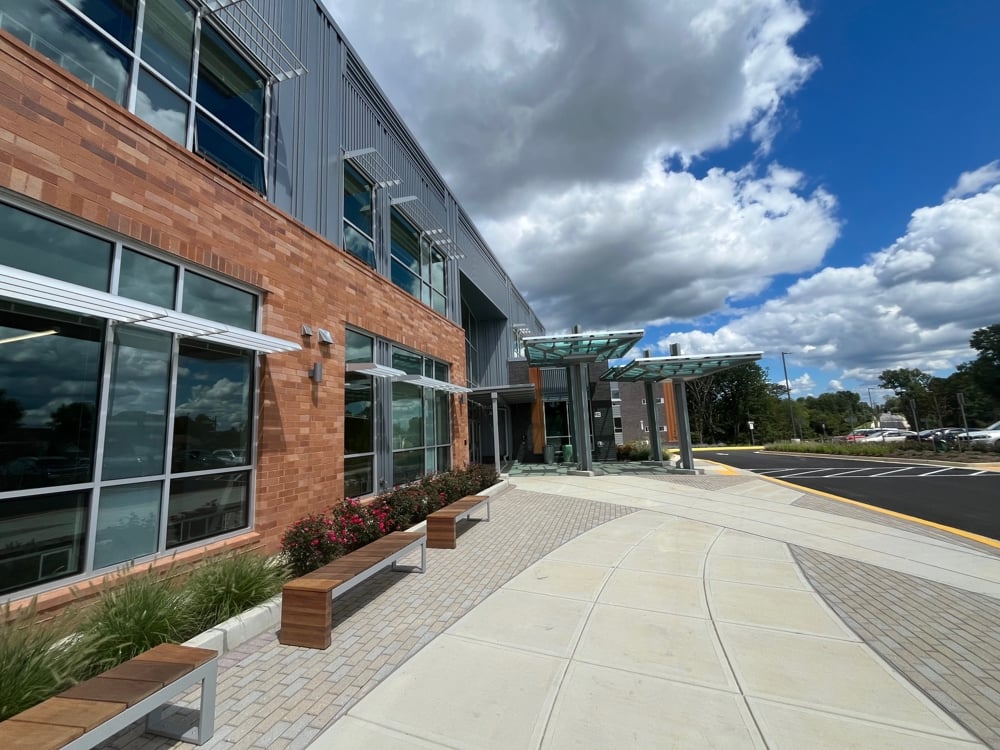
Ellen Ochoa Middle School and its geothermal piping
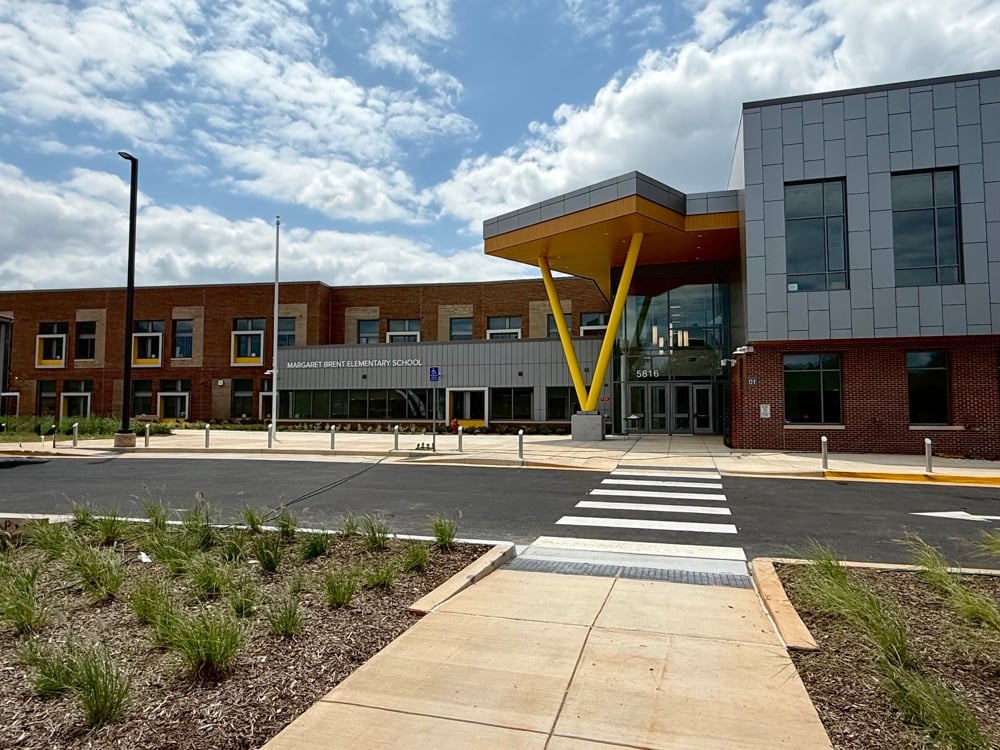
Ellen Ochoa Middle School in Landover Hills and the newly-constructed Margaret Brent Elementary in New Carrollton are examples of how PGCPS prioritizes energy efficiency and sustainability. By eliminating fossil fuels from their heating and cooling systems, these schools provide all the benefits to students listed above. In addition, geothermal schools generate federal tax credit incentives for the school district through investment in energy-efficient equipment.
 |
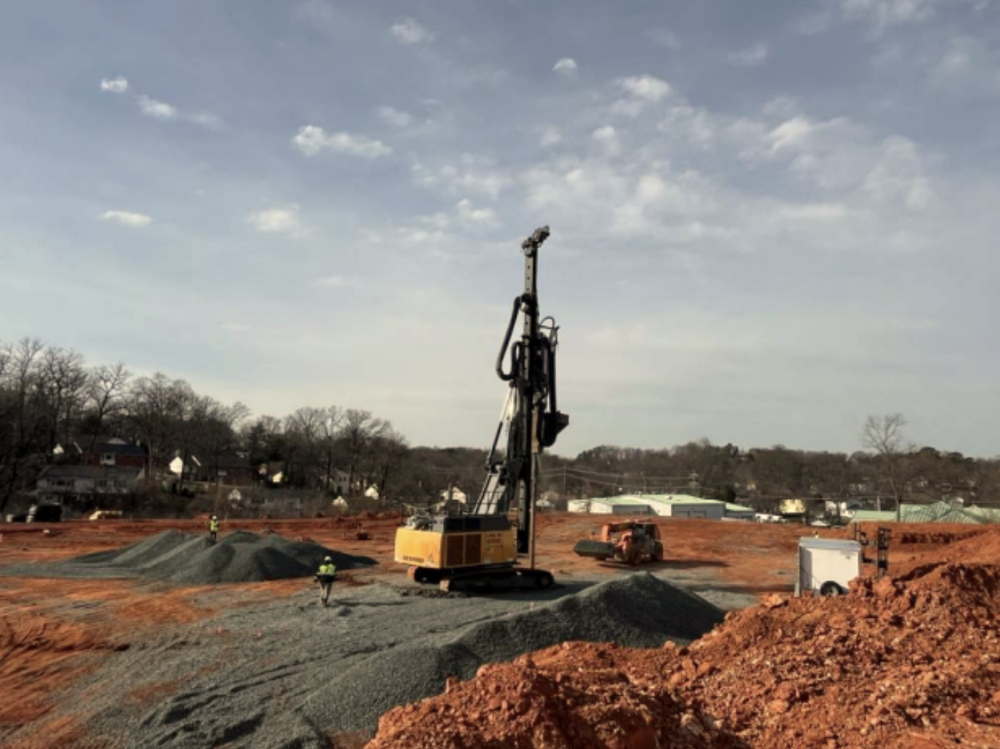 |
Margaret Brent Elementary School and its geothermal pier construction